
Lighting is one of the most important yet often overlooked elements of a commercial or industrial facility. Outdated lighting systems can negatively affect productivity, increase energy costs, and create unsafe working conditions. As businesses look for ways to improve efficiency and reduce operational expenses, LED lighting has emerged as a powerful solution.
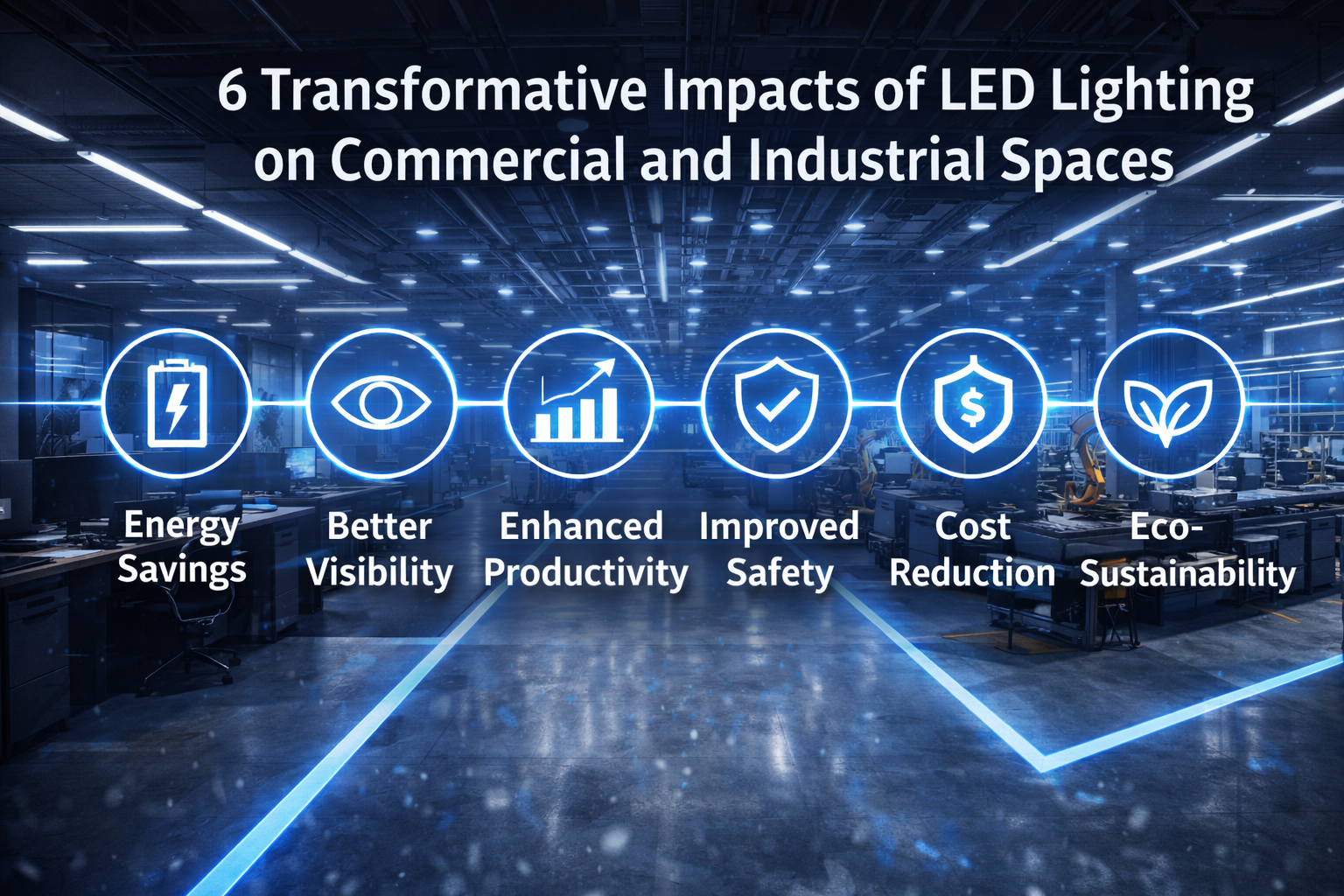
LED technology is transforming commercial and industrial spaces by providing brighter illumination, improved energy efficiency, and long-term reliability. Below are six ways LED lighting is making a significant impact on modern facilities.
1. Dramatically Lower Energy Consumption
Traditional lighting systems such as metal halide, fluorescent, and high-pressure sodium fixtures require large amounts of electricity to operate. In facilities where lights run for many hours each day, energy costs can become a major expense.
LED lighting uses significantly less power while delivering brighter and more efficient illumination. Many businesses reduce their lighting-related energy consumption by 50–80 percent after switching to LED systems, creating substantial long-term savings.
2. Improved Workplace Safety
Industrial and commercial environments require clear visibility to maintain safe working conditions. Poor lighting can create shadows, dark areas, and inconsistent brightness that increase the risk of accidents.
LED lighting provides consistent, evenly distributed illumination that improves visibility across large spaces such as warehouses, manufacturing plants, and distribution centers. Better lighting allows employees to safely operate equipment, navigate facilities, and complete tasks with greater confidence.
3. Increased Employee Productivity
Lighting quality can have a direct impact on employee performance. Dim or flickering lighting can cause eye strain, fatigue, and reduced focus for workers who rely on good visibility to complete their tasks.
LED lighting delivers bright, stable illumination that creates a more comfortable work environment. Employees working in well-lit spaces are better able to concentrate, perform tasks accurately, and maintain productivity throughout the workday.
4. Reduced Maintenance and Downtime
Maintaining traditional lighting systems can be expensive and disruptive, particularly in facilities with high ceilings or hard-to-reach fixtures. Frequent bulb replacements and repairs require time, labor, and equipment.
LED lighting systems have a much longer lifespan, often lasting 50,000 hours or more. This significantly reduces the need for maintenance and allows facilities to operate without frequent interruptions caused by lighting repairs.
5. Better Lighting Control and Flexibility
Modern LED lighting systems offer greater flexibility and control compared to traditional lighting. Many LED systems can be integrated with smart lighting controls, occupancy sensors, and daylight harvesting technology.
These features allow businesses to optimize lighting usage based on real-time needs, further improving energy efficiency while maintaining ideal lighting conditions throughout the facility.
6. Strong Return on Investment
Upgrading to LED lighting is one of the most cost-effective improvements a business can make. The combination of energy savings, lower maintenance costs, and improved operational efficiency provides a strong return on investment.
Many companies also qualify for utility rebates and incentive programs when installing energy-efficient LED lighting systems. These programs can help reduce upfront costs while accelerating the financial benefits of the upgrade.
Transform Your Facility with LED Lighting
LED lighting is more than just a lighting upgrade—it is a transformative improvement that can enhance the performance of commercial and industrial spaces. By switching to LED systems, businesses can improve safety, reduce operating costs, and create brighter, more efficient environments.
As more companies modernize their facilities, LED lighting continues to play a key role in helping businesses operate more effectively and sustainably for the future.